How to Ask for a Raise: What to Say, Word for Word

Key takeaway
Set up a meeting, open with your results, and name one number backed by market pay. Here are the exact words, and what to say if the answer is "not now."
Here is how to ask for a raise: set up a meeting just for that topic, open with two or three results you delivered, and name one specific number based on market pay. Then stop talking and let your manager answer.
That is the whole method. This guide gives you the exact words, the best timing, and what to say when the answer is "not now."
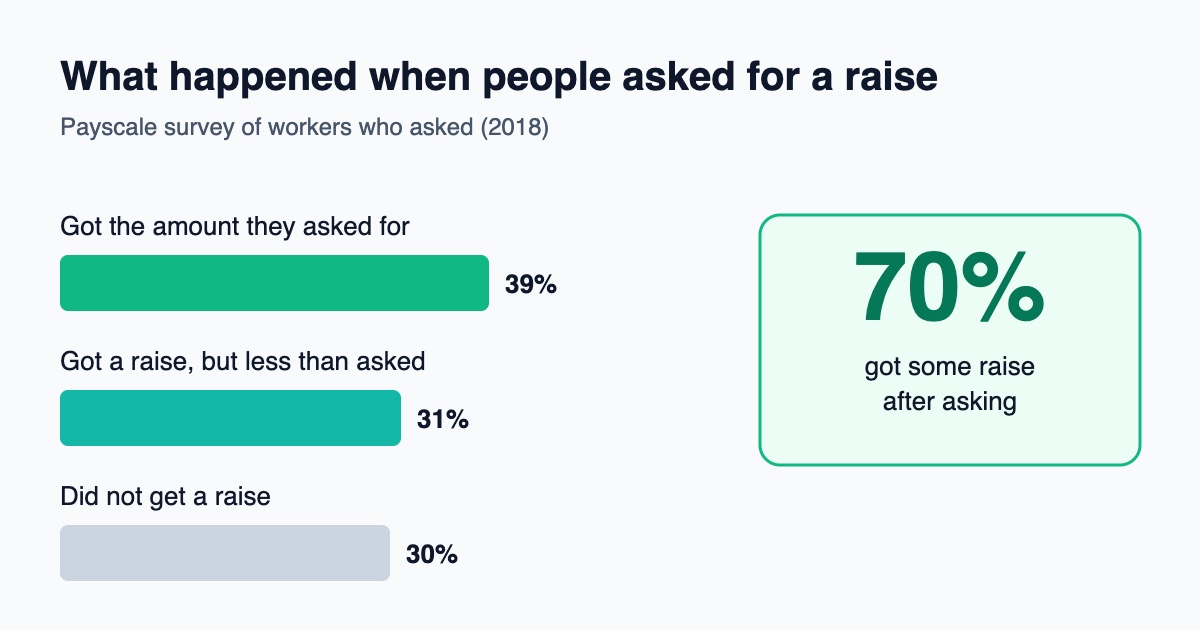
It works more often than most people expect. In a Payscale study reported by HR Dive, 70% of workers who asked got some raise. 39% got the full amount they asked for, and 31% got less.
When is the best time to ask for a raise?
Ask a month or two before your company sets next year's budget, not during the review itself. By review day, the money is often already split up.
Good moments:
- Right after a clear win, like a launch, a big client or a project that saved money.
- When your job has grown, for example you now train new people or own a new area.
- A few weeks before the yearly review cycle starts.
Bad moments: the week of layoffs, the last days of a hard quarter, or right after your manager got bad news.
How much of a raise should you ask for?
Ask for one specific number, based on what the market pays for your role. Do not base it on your rent or your bills. Your manager has to defend the number to someone else, and "the market pays this" is easy to defend.
For context, a normal year gives most people a modest bump. The Conference Board found that US companies plan salary budget increases of about 3.4% on average in 2026, the same as 2025. If you want much more than that, you need a reason beyond "I did my job well."
| Your situation | What to ask for |
|---|---|
| Doing your job well, same role | At or a bit above the normal budget |
| Your role grew a lot | Market pay for the bigger role |
| You are paid below market | The gap, with proof |
Where to find market pay:
- The Occupational Employment and Wage Statistics from the US Bureau of Labor Statistics, by job and by area.
- Job postings for similar roles that list a pay range.
- Trusted people in your field who will share numbers.
Ask for a single number, a little above your target. A range tells your manager to pick the bottom of it.
How to ask for a raise, word for word
Here is a script you can copy. Change the details, keep the structure.
1. Ask for the meeting.
"Could we set up 30 minutes next week to talk about my role and my pay? I'd like to come prepared."
2. Open with results.
"Thanks for making time. I want to talk about my salary. Over the past year I [result with a number], [second result], and I took on [new responsibility]."
3. Name the number.
"Based on that, and on what similar roles pay in our area, I'm asking for a salary of $X."
4. Stop talking.
Silence feels long. Let it be. The first person to fill it with "but I understand if..." gives ground.
5. Ask about the path.
"What would you need to see to make that happen?"
What should you not say when asking for a raise?
- "I need more because my rent went up." Pay follows value, not your costs.
- "Sam makes more than me." It sounds like a complaint and puts your manager on the defensive.
- "Give me a raise or I'll leave." Only say it if you already have an offer and would take it.
- "Sorry, I know this is awkward." Do not apologize for asking. It is a normal part of the job.
What do you say if they say "not now" or "no"?
Treat "not now" as the start of a plan, not the end of the talk. Your goal is a clear next step with a date.
| What they say | What you say back |
|---|---|
| "There's no budget right now." | "I understand. When is the budget set, and can my raise be on that list now?" |
| "You're doing great, but it's not the right time." | "Thank you. What would need to be true for this to happen, and by when?" |
| "That number is too high." | "What number could you get approved today? And what would get me to $X by the next review?" |
| "No." | "Okay. Can you help me see what's missing, so I can work on it?" |
If salary is truly stuck, ask about other things that have value: a better title, extra paid time off, a training budget, more remote days, or a new review in three to six months.
Then send a short email the same day. For example:
"Thanks for today. To confirm, we'll revisit my salary on March 1, and you'll check the budget with HR."
A written recap turns a vague promise into a date.
Should you ask for a raise in person or by email?
Ask for the meeting by email or chat, have the talk live, then confirm in writing. A live talk lets you read the reaction and answer questions. If your team is remote, a video call works fine.
How to prepare in 20 minutes
- Write down three results, each with a number (money, time, customers, errors).
- Pick your one number from market data.
- Say your opening out loud three times, so it sounds like you.
- Write your answer to "not now" before the meeting, not during it.
Nerves are normal. If your voice tends to speed up or go quiet, these tips on how to be more confident in conversations help.
For a talk that may get tense, the GRACE framework for difficult conversations is a good warm-up. And if you are weighing a new job offer instead, read how to answer salary expectations.
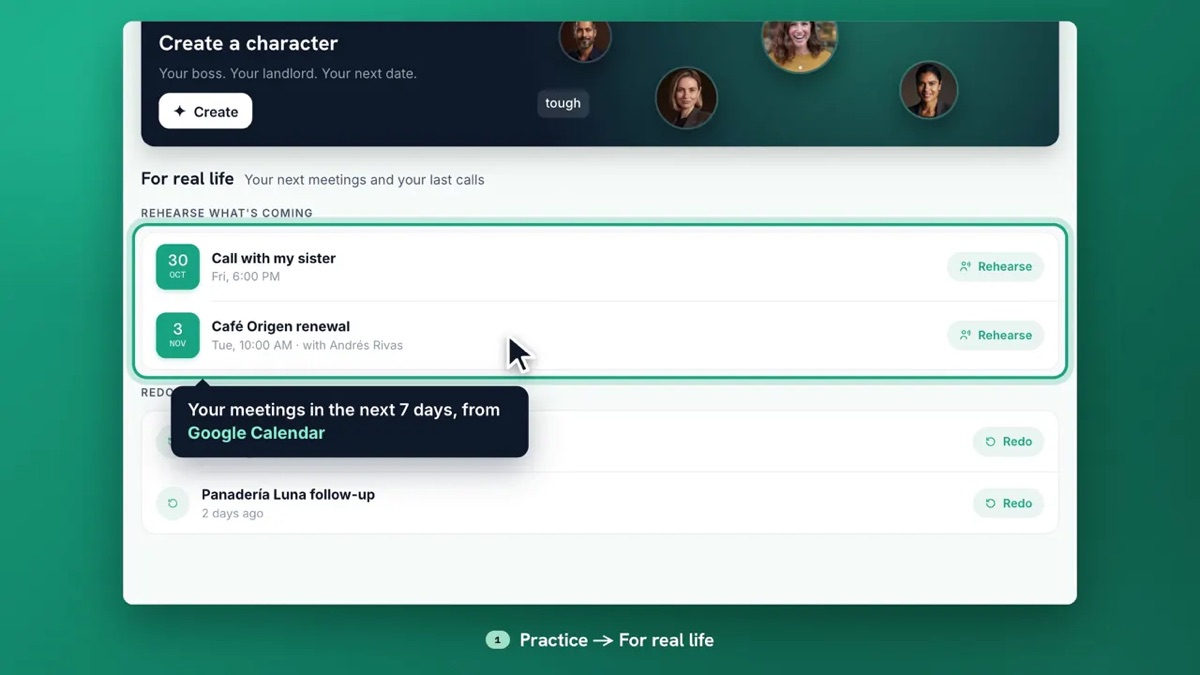
Practice the ask before the real meeting. In TalkPilot's Practice mode you can create a character who plays your boss, say your opening out loud, and hear the pushback before it counts. Get TalkPilot and run the talk twice tonight. More everyday uses are on the everyday conversations page.
FAQ
How much of a raise is normal in 2026?
Most US companies plan pay budgets of about 3.4% on average for 2026, according to The Conference Board. Promotions and big role changes usually come with more.
Can I ask for a raise after only one year?
Yes. One year is a common time to ask, especially if you can point to clear results or new duties.
Should I bring up a job offer from another company?
Only if it is real and you would accept it. Using an offer as a bluff can backfire if your manager says "then you should take it."
What if I'm nervous I'll freeze?
Write your first two sentences on a card and say them out loud a few times before the meeting. Once you start, the rest is easier.
Sources
Alexis Daniels · Founder, TalkPilot
Alexis Daniels is the founder of TalkPilot, a real-time AI communication coach for sales calls, interviews, support conversations and everyday high-stakes talks. He writes about what live conversation assistance actually changes, and where it doesn't help.
Ready for better conversations?
Join people using TalkPilot as their silent AI copilot for the conversations that matter.